The Tool
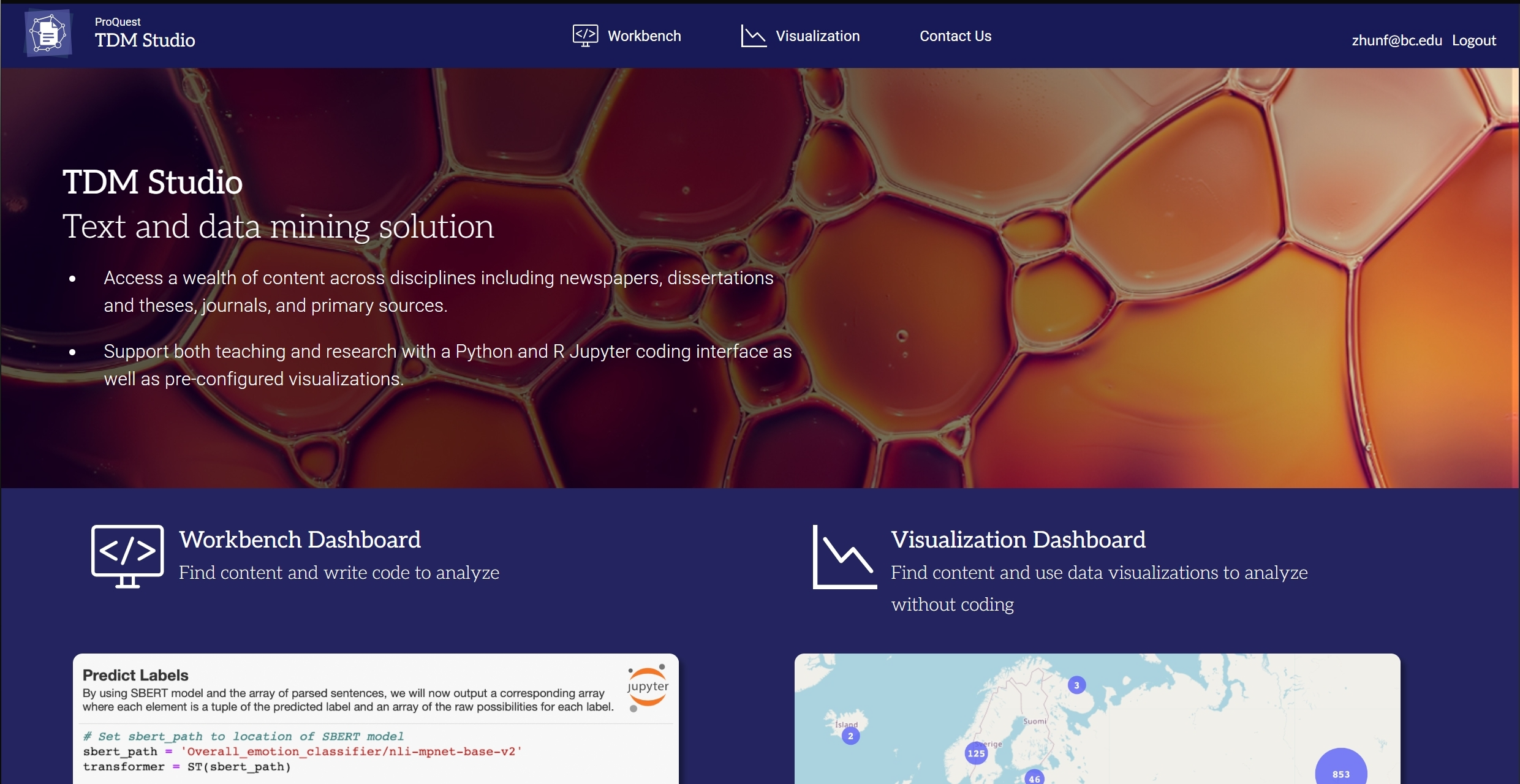
Early in the project, I was introduced to a variety of tools related to sentiment and textual analysis. Out of all of them, I was given a pretty comprehensive demo of ProQuest TDM, which I decided to use for this project. ProQuest TDM is a text and data mining platform that enables researchers to analyze vast amounts of content from ProQuest’s extensive database. Their database includes a variety of sources including newspapers, magazines, thesis dissertations, and many more. I mainly focused on the visualization dashboard which included three preset tools that could be automatically run on collections of up to 10,000 documents.
 |
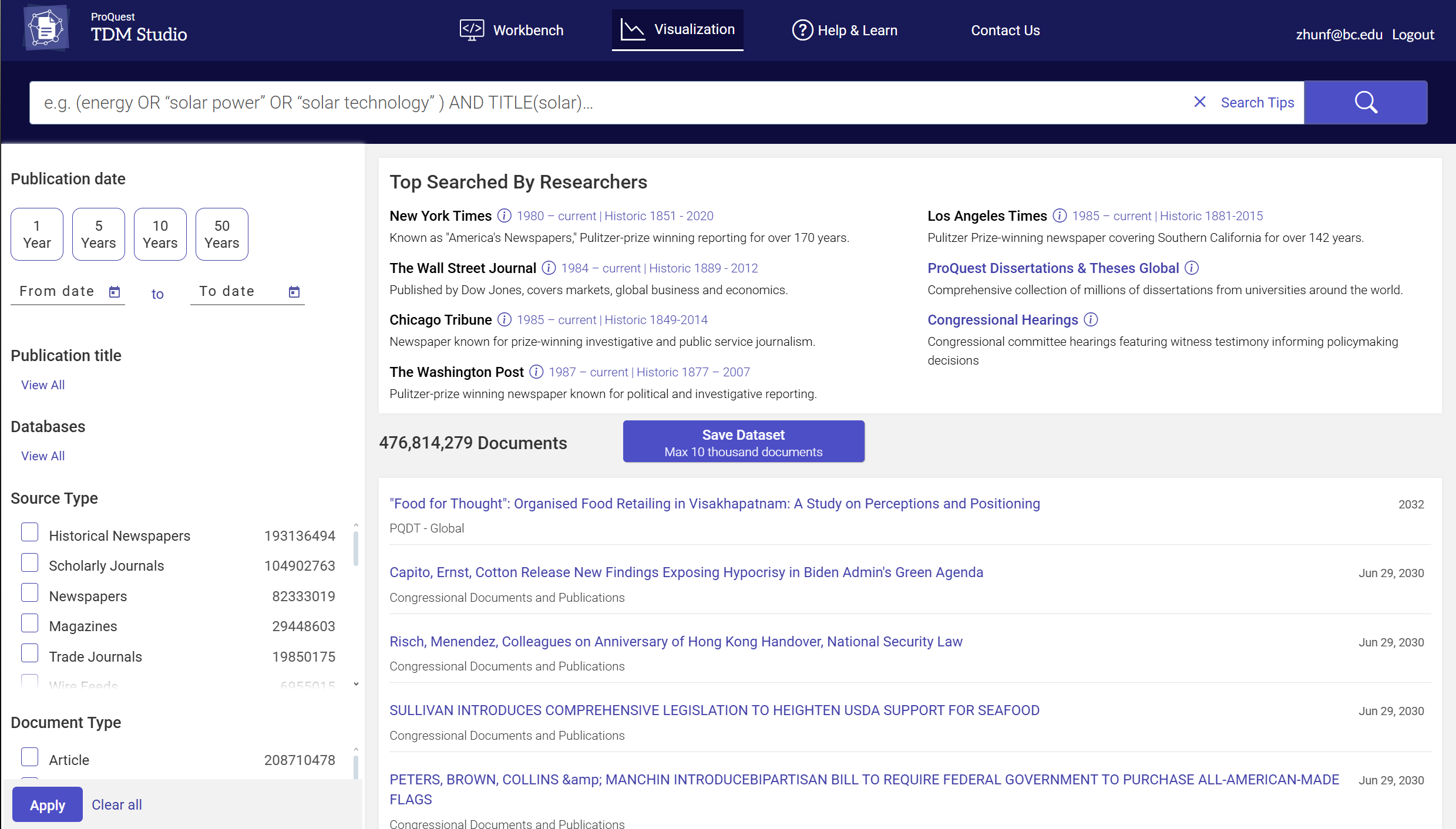 |
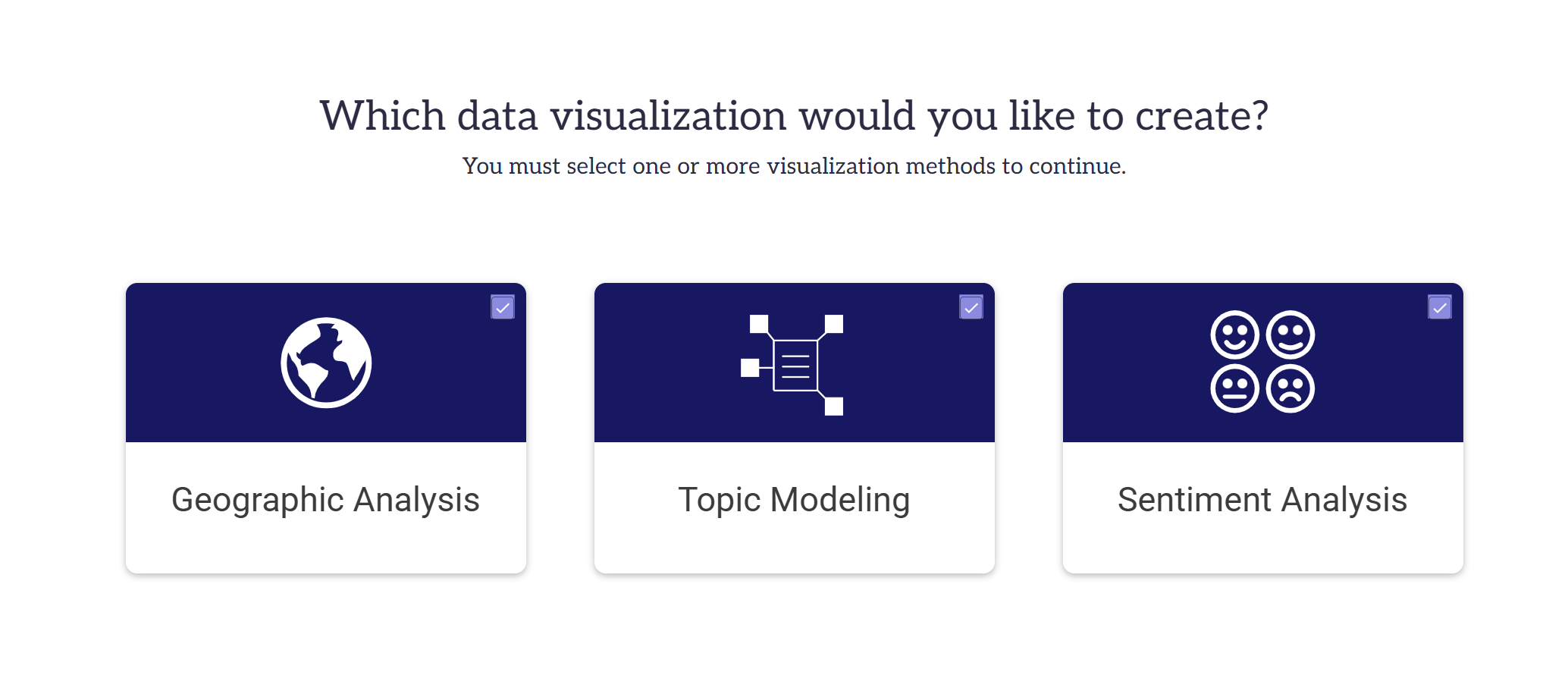
| Tools Page | Search Page |
These three tools were Topic modeling, Geographic referencing, and most importantly, Sentiment analysis. These three tools would help me develop this part of the project.
The Method
Initial Searching
Firstly, to get a general timeline of sentiment analysis. I set my search to just “Boston Elevated Railway” to get a general sense of how much refining I would need to do. Starting general was key so that I would have some base to compare with whenever I had to look into more specific topics.
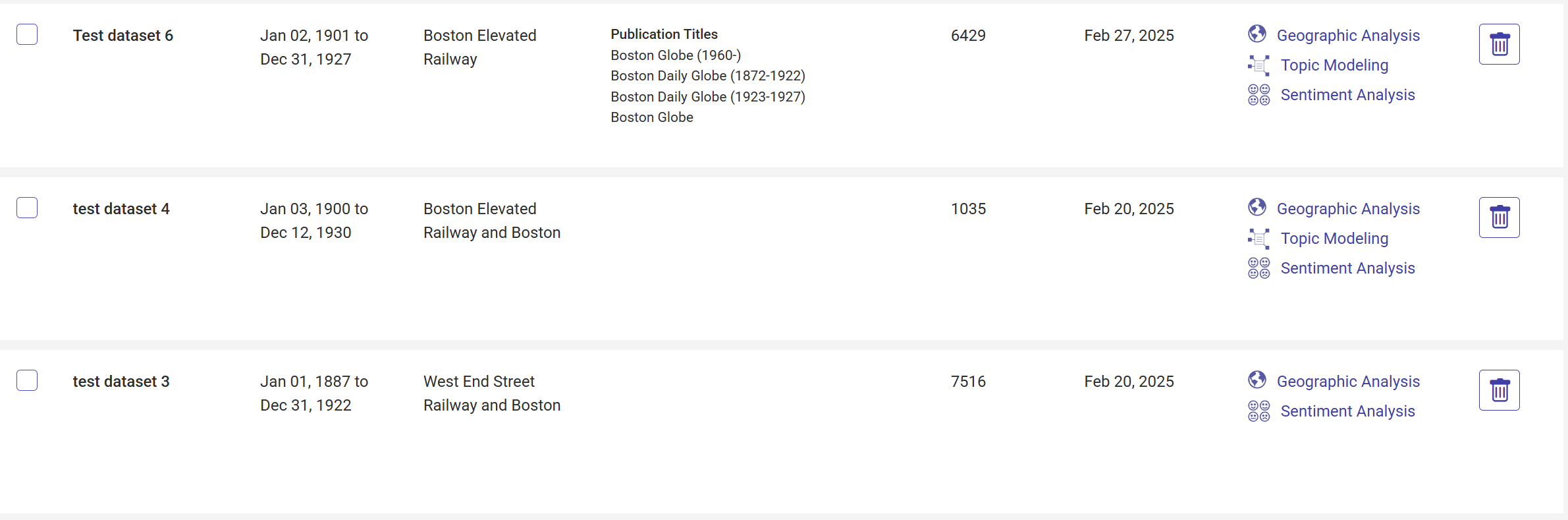
As shown above, general searches yield thousands of results which gives the site a lot of data to crunch. It also let me see generally how things would look, being able to see things take shape while also being able to guess how they would look when I took a deeper dive into my specific events.
Refining the search
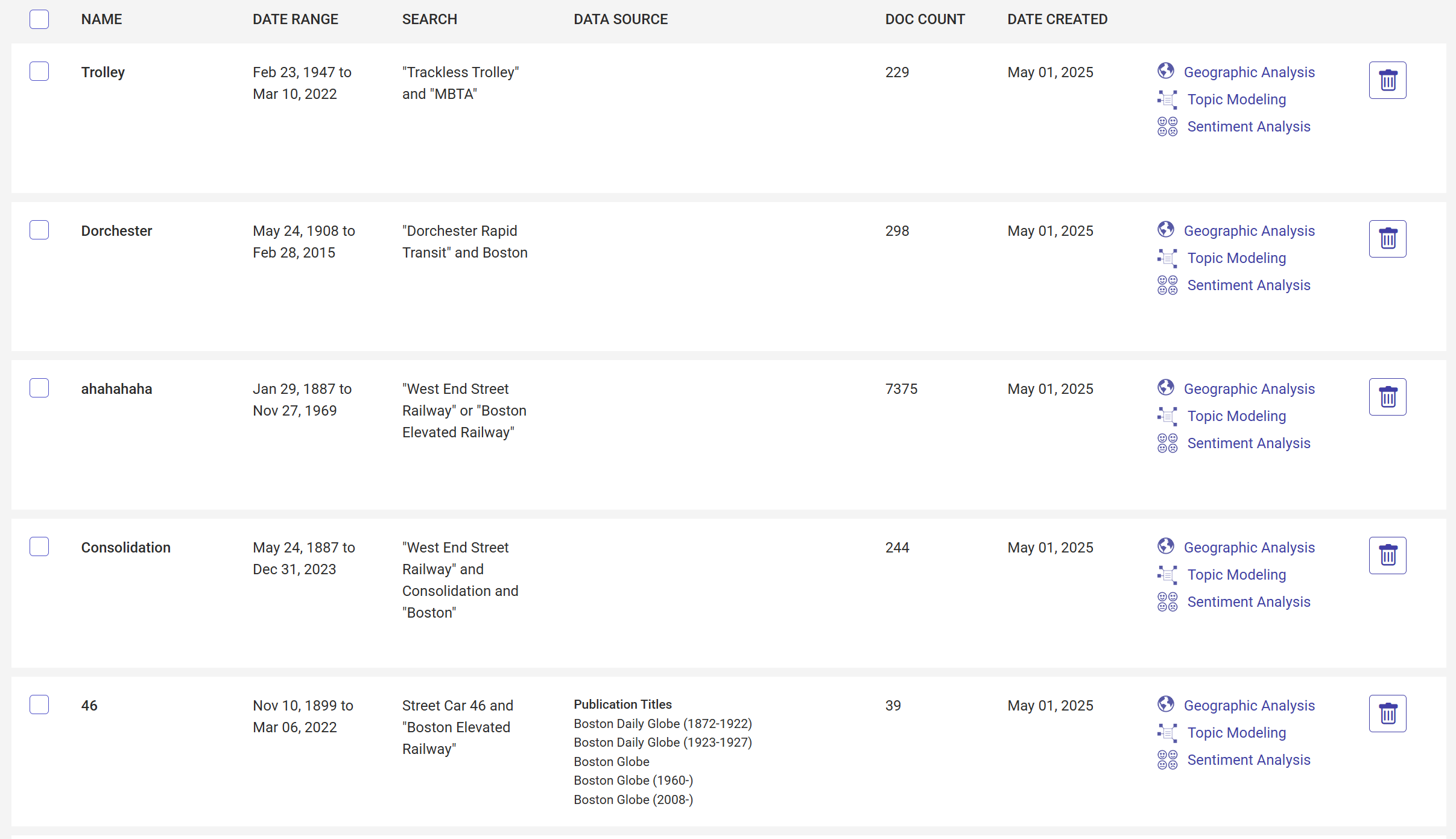
When it came to focusing on specific events, the use of boolean operators proved to be the most useful. It allowed me to take general terms like subway, train, and bus and frame them specifically for Boston or one of the transportation companies. Another thing was properly utilizing filters to narrow down results even more. Specifically looking for articles
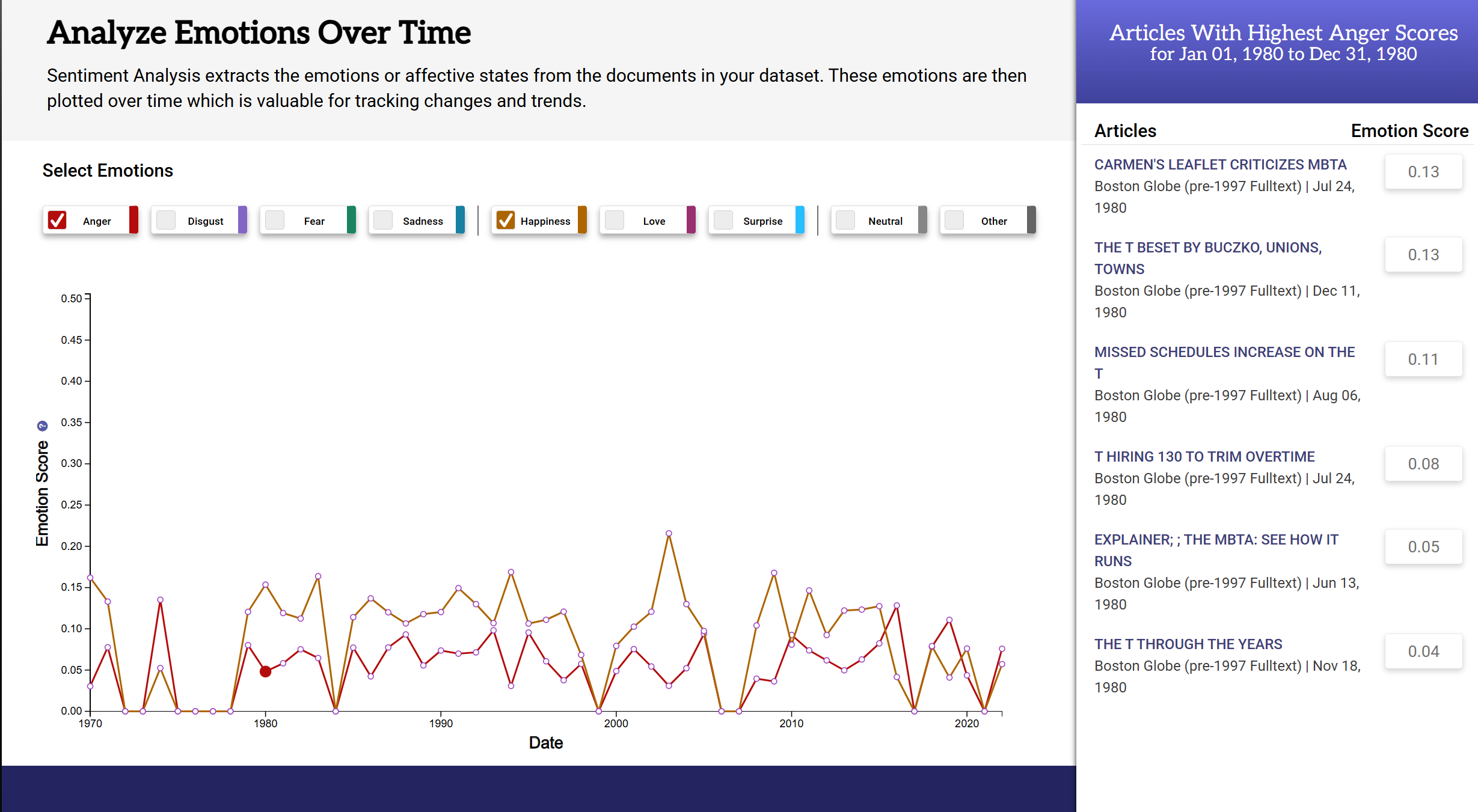
It was also helpful to be able to see specific articles that are referenced for the sentiment analysis as that allowed me to check to make sure that the articles being analyzed were on topic and not about completely unrelated things. The lower amount of articles per search also let me check to specific ones so I could get some more specific insight into where some of the sentiment analysis data came from.